Classical Art Periods
Renaissance: (1400 – 1580)
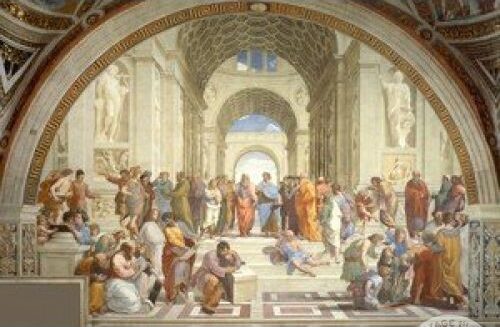
The School of Athens by Raphael
Three distinct periods within the Renaissance Period were Early and High Renaissance (1400–1550); Venetian and Northern Renaissance (1430–1550); Mannerism (1527–1580). Renaissance art, painting, sculpture, architecture, music, and literature were produced during the 14th, 15th, and 16th centuries in Europe under the combined influences of an increased awareness of nature, a revival of classical learning, and a more individualistic view of man.
The 10 greatest Painters of the Renaissance period were
Raffaello Sanzio
Leonardo da Vinci
Michelangelo
Tintoretto
Sandro Botticelli
Titian
Masaccio
Domenico Ghirlandaio
Caravaggio
Giovanni Bellini
The 10 greatest Paintings of the Renaissance period were:
The School of Athens by Raphael
Mona Lisa by Leonardo Da Vinci
The Creation of Adam by Michelangelo
Primavera by Sandro Boticelli
The Sleeping Venus by Titian
The Last Supper by Tintoretto
Expulsion from the Garden of Eden by Masaccio
Crossing of the Red Sea by Ghirlandaio
Mary Magdalen in Ecstasy by Caravaggio
Feast of the Gods by Giovanni Bellini
Baroque: (1600–1750)
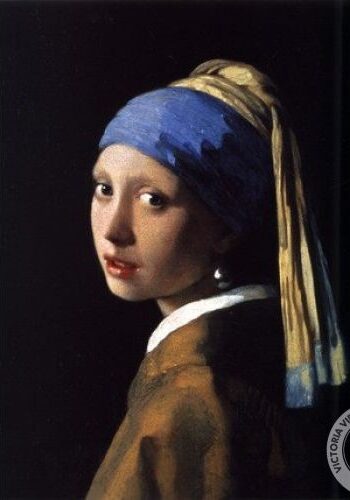
Girl with a Pearl Earring by Jan Vermeer Van Delft
This period in art history saw the development of a style of architecture, music, dance, painting, sculpture and other arts that flourished in Europe from the early 17th century until the 1750s. In the territories of the Spanish and Portuguese empires including the Iberian Peninsula this style continued, together with new styles, until the first decade of the 1800s.
Some of the qualities most frequently associated with the Baroque are grandeur, sensuous richness, drama, vitality, movement, tension, emotional exuberance, and a tendency to blur distinctions between the various arts.
The 10 greatest Painters of the Baroque period were
Peter Paul Rubens
Rembrandt van Rijn
Johannes Vermeer
Michelangelo Merisi
Diego Velázquez
Nicolas Poussin
Gian Lorenzo Bernini
Anthony van Dyck
Artemisia Gentileschi
José de Ribera
The 10 greatest Paintings of the Baroque period were:
The Massacre of the Innocents by Reubens
The Storm on the Sea of Galilee by Rembrandt
Girl with a Pearl Earring by Vermeer
The Calling of Saint Matthew by Caravaggio
The Rokeby Venus by Velázquez
Et In Arcadia Ego by Poussin
Fountain of the Four Rivers by Bernini
The Brazen Serpent by van Dyck
Madonna and Child by Gentileschi
Immaculate Conception by José de Ribera
Neoclassical: (1750–1850)
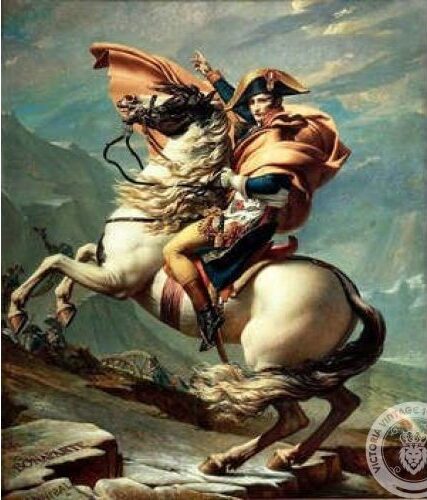
Napoleon Crossing the Alps by Jacques-Louis David
This period may be seen as one in which art recaptures Greco-Roman grace and grandeur. Neoclassical art, also called Neoclassicism and Classicism, a widespread and influential movement in painting and the other visual arts that began in the 1760s, reached its height in the 1780s and ’90s, and lasted until the 1840s and ’50s. Neoclassicism in the arts is an aesthetic attitude based on the art of Greece and Rome in antiquity, which invokes harmony, clarity, restraint, universality, and idealism.
Neoclassical painting is characterized by the use of straight lines, a smooth paint surface, the depiction of light, a minimal use of color, and the clear, crisp definition of forms.
The 10 greatest Painters of the Neoclassical period were
Anton Raphael Mengs
Gheorghe Tattarescu
William-Adolphe Bouguereau
Louise Élisabeth Vigée Le Brun
Albert Henry Krehbiel
Jean Auguste Dominique Ingres
Anselm Feuerbach
Jacques-Louis David
Jens Adolf Jerichau
Alexandre Jacovleff
The 10 greatest Paintings of the Neoclassical period were:
Parnassus by Anton Mengs
Hagar in the Desert by Gheorghe Tattarescu
The Birth of Venus by William-Adolphe Bouguereau
Portrait of Marie Antoinette with Her Children Louise Élisabeth Vigée Le Brun
Lady and Her Bowl of Nasturtiums by Albert Krehbiel
Grande Odalisque by Dominique Ingres
Plato’s Symposium 1869 and 1874 versions by Anselm Feuerbach
Napoleon Crossing the Alps by Jacques-Louis David
The school of Athens, which tries to capture the essence of Rafael’s earlier painting by Jens Adolf Jerichau.
Mythological Landscape by Alexandre Jacovleff
Romanticism: (1780–1850)
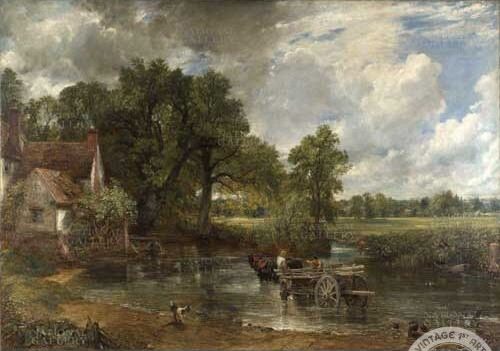
The Hay Wain by John Constable
This period began about 1770 AD and continued until about 1850 AD. Romanticism was an artistic, literary, musical, and intellectual movement that originated in Europe towards the end of the 18th century, and in most areas was at its peak in the approximate period from 1800 to 1850.
Romanticism was characterized by its emphasis on emotion and individualism as well as glorification of all the past and nature, preferring the medieval rather than the classical. It was partly a reaction to the Industrial Revolution. Romanticism emphasized the individual, the subjective, the irrational, the imaginative, the personal, the spontaneous, the emotional, the visionary, and the transcendental.
The 10 greatest Painters of the Romanticism period were
Francisco Goya
J.M.W. Turner
Caspar David Friedrich
Eugene Delacroix
William Blake
John Constable
Theodore Gericault
Ivan Aivazovsky
Francesco Hayez
Thomas Cole
The 10 greatest Paintings of the Romanticism period were:
The Third of May 1808 by Francisco Goya
The Fighting Temeraire J. W. Turner
Wanderer above the Sea of Fog by Caspar Fiedrich
Liberty Leading the People by Eugene Delacroix
Newton by William Blake
The Hay Wain by John Constable
The Raft of the Medusa by Theodore Gericault
The Ninth Wave by Ivan Aivazovsky
The Kiss by Klimt
The Oxbow by Thomas Cole
Realism: (1848–1900)
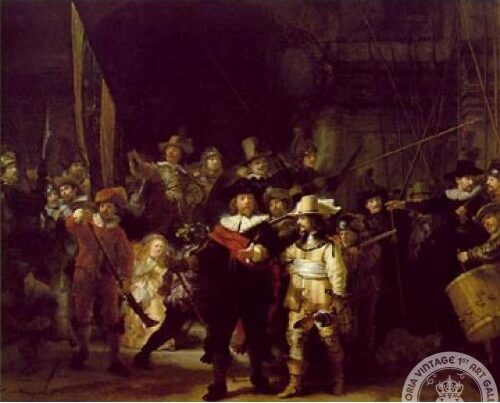
The Night Watch by Rembrandt van Rijn
This period, in its specific sense, refers to a mid-nineteenth century artistic movement characterized by subjects painted from everyday life in a naturalistic manner; however the term is also generally used to describe artworks painted in a realistic almost photographic way.
Artists attempted to portray the lives, appearances, problems, customs, and mores of the middle and lower classes, of the unexceptional, the ordinary, the humble, and the unadorned. Indeed, they conscientiously set themselves to reproducing all the hitherto-ignored aspects of contemporary life and society—its mental attitudes, physical settings, and material conditions.
The 10 greatest Painters of the Realism period were
Rembrandt van Rijn
Gustave Courbet
Jean-François Millet
Henry Ossawa Tanner
Columbano Bordalo Pinheiro
Théodore Rousseau
Edgar Degas
Edward Hopper
William-Adolphe Bouguereau
Édouard Manet
The 10 greatest Paintings of the Realism period were:
The Night Watch by Rembrandt van Rijn
Young Ladies of the Village by Gustave Courbet
Peasants Bringing Home a Calf Born in the Fields
The Lion’s Group by Columbano Bordalo Pinheiro
Market-Place in Normandy
Tangiers by Henry Ossawa Tanner
Arabesque by Edgar Degas
American Village by Edward Hopper
The Birth of Venus by William-Adolphe Bouguereau
The Railway by Édouard Manet
Impressionism (1865–1885) and Post Impressionism (1885–1910)
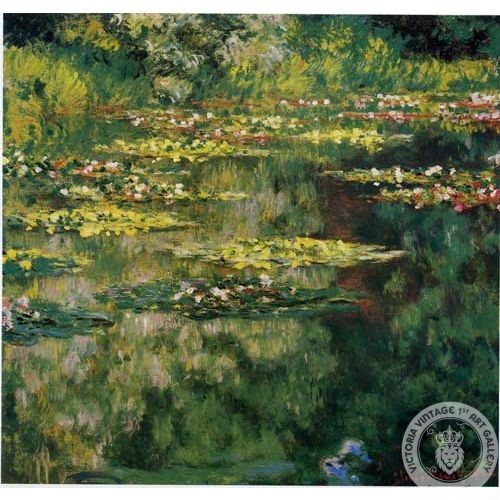
Water Lily Pool by Claude Monet
Impressionism can be described as the 19th-century avant-garde art movement that originated in France as a reaction against the established art of the French Academy and the government- sponsored annual exhibitions (Salons). The aim was to accurately portray visual impressions by painting scenes and subjects on the spot, using visible brushstrokes to record the changing qualities of light and movement. Impressionism was considered controversial and boundary- breaking in its time and artists like Monet, Degas and Renoir were shunned by the art establishment, causing quite a stir with their radical new style of painting.
Édouard Manet, considered the father of impressionism, has the first, second and seventh entries. His Dejuner Sur l'Herbe (Lunch on the Grass) and Olympia, completed in the early 1860s, challenged the established way of painting but were shunned by the Academy des Beaux Arts and attacked by the critics. Another one of his paintings Bar at the Folies Bergere (1881) was also heavily criticized, but later earned high praise as a brilliant illustration of Impressionism movement artwork.
The 10 greatest Painters of the Impressionism (1865–1885) and Post Impressionism (1885–1910) period were
Claude Monet
Pierre-Auguste Renoir
Vincent van Gogh
Edgar Degas
Édouard Manet
Paul Cézanne
Camille Pissarro
Berthe Morisot
Jean Béraud
Paul Gauguin
The 10 greatest Paintings of the Impressionism (1865–1885) and Post Impressionism (1885–1910) period were:
Water Lily Pool by Claude Monet
Luncheon at the Boating Lake
Cafe Terrace at Night
Card Players by Paul Cézanne
Dancing Class by Edgar Degas
Bullfight by Édouard Manet
Boulevard Montmatre
The Port of Nice by Berthe Morisot
Boulevard des Capucines by Jean Béraud
Tahitian Women on the Beach
Fauvism and Expressionism: (1900 - 1935)
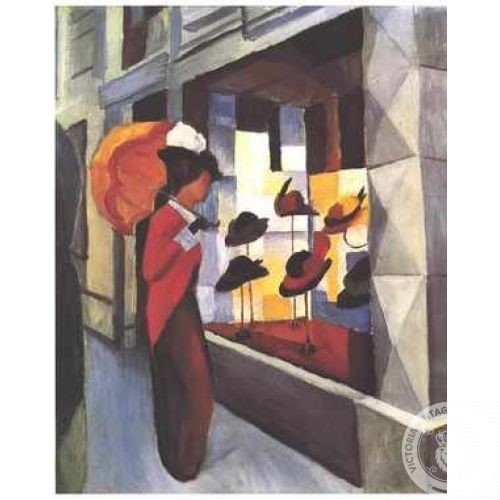
Before the Hat Shop by August Macke
This movement was denoted by harsh colours and flat surfaces (Fauvism); and image distorting forms.
The most noted painters of this movement were Matisse, Kirchner, Kandinsky, and Marc 11 The most famous paintings were: The Dessert: Harmony in Red by Matisse; View of Basel and the Rhine by Kirchner; Gold Trees by Kandinsky; and America Windows by Marc.
Cubism: (1905 - 1920)
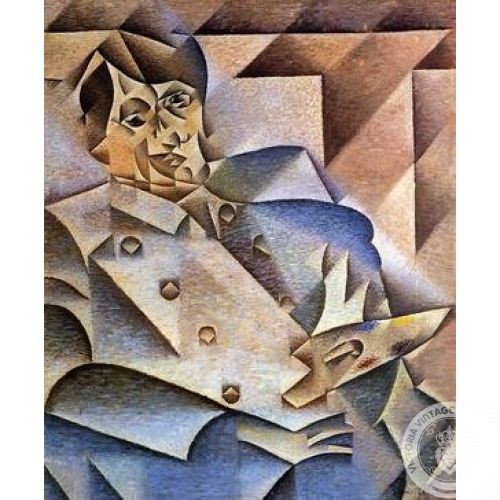
Portrait of Pablo Picasso
Art Experts have described this era as one attributed to the pre- and post- World War 1 era, which saw new forms of art experiments: new forms to express modern life. The most noted painters of this movement were Piccaso, Braque, Leger, Boccioni, Severini and Mavelich.
The most famous paintings were: Weeping Women by Picasso; The Viaduct at L’Estaque by Braque; Still Life with Candlestick by Leger; The Morning by Boccioni; La Bohemienne by Severini; and The Woodcutter by Mavelich.
Dada and Surrealism: (1917 - 1950)
Critics have described this art as being ridiculous, painting dreams and exploring the subconscious. The most famous painters were: Duchamp, Ernst, PIcabia, Jean Hans (Arp), Doesberg, and Dix. The most well known paintings were: Le Grande Verre by Duchamp, Murdering Airplane by Ernst, Adam and Eve by Picabia, Abstract Composition by Jean Hans (Arp), Window with Coloured Glass by Doesburg, The Triumph of Death by Dix.
The most famous paintings were: Weeping Women by Picasso; The Viaduct at L’Estaque by Braque; Still Life with Candlestick by Leger; The Morning by Boccioni; La Bohemienne by Severini; and The Woodcutter by Mavelich.
Abstract Expressionism and Pop Art (1940s to 1960s)
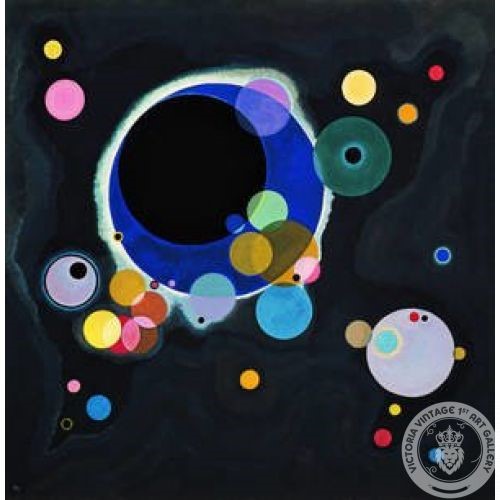
Several Circles by Wassily Kandinsky
This art form relates to the period during and post World War II. It is characterised by pure abstraction and expression without form: a popular art expression that absorbs consumerism. The most noted painters of this movement were: Gotky, Pollock, de Kooning, Rothco, Warhol, and Lichtenstein.
The most famous paintings were: Water of the Flowery Mill by Gotky, Lavender Mist by Pollock, Pink Angels by de Kooning, Entrance to Subway by Rothco, Flower Series by Warhol, and Happy Tears by Lichtenstein.
Postmodernism and Deconstructivism: (1970s ……)
This art form is characterised as being without a centre and mixing and reworking with past styles. The most noted painters of this movement were Richter, Sherman, Kiefer, Gehry and Hadid.
The most famous paintings were:Cologne Cathedral Window by Richter, Madame le Pampadour by Sherman, aller Tage Abend by Kiefer, Dancing House in Prague by Gehry, and Cardiff Bay Opera House by Hadid.